LEADERSHIP & GOVERNANCE

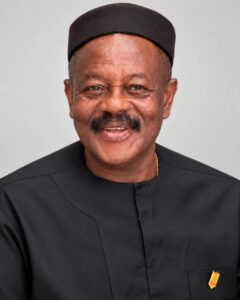
John Adewakun
A Legal and Political Analysis of the 15th August 2026 Governorship Election
By John Oluwasina Adewakun, Esq. Legal Practitioner | Political Analyst | Immediate Past Secretary, Nigerian Bar Association, Gwagwalada Branch
INTRODUCTION: OSUN STATE AT A POLITICAL CROSSROADS
On Saturday, 15th August 2026, the people of Osun State will once again be called upon to exercise one of the most fundamental instruments of democratic
governance: the right to choose who governs them.
The forthcoming Osun State Governorship Election is, on the surface, a contest between political parties and candidates. Beneath that surface, however, lies a much more complicated struggle involving incumbency, political structures, personalities, federal influence, grassroots mobilisation, historical loyalties, public perception and the search for an alternative political force.
It is therefore tempting to reduce the election to a contest between personalities. But that would be an oversimplification.
The election is better understood as a contest among competing political forces, with Governor Ademola Adeleke seeking re-election on the platform of the Accord Party, Bola Oyebamiji representing the All Progressives Congress (APC), and former Osun State House of Assembly Speaker Najeem Salaam representing the African Democratic Congress (ADC), alongside other candidates on the ballot. INEC’s final list contains candidates from 14 political parties.
For analytical purposes, however, these three political camps presently constitute the most prominent forces around which much of the political conversation is being organised.
The fundamental question, therefore, is not simply: “Who will win the election?”
The deeper question is: “Which political force has sufficiently understood the mood, structure, psychology and voting behaviour of the people of Osun State to convert political influence into actual votes?” That is where the real contest lies. Let me break this down in the sub-headings below:
- OSUN 2026: AN ELECTION WITH MORE THAN ONE STORY
Every election has an official story and an unofficial story. The official story is about political parties, candidates, manifestoes, campaigns and votes while the unofficial story is about power. The Osun election appears to have both.
His Excellency, Governor Ademola Adeleke is seeking to retain the office he currently occupies. He therefore enjoys the traditional advantages associated with incumbency: visibility, access to governmental structures, familiarity with the electorate, an existing political network and the ability to campaign on the basis of his administration’s record. But it should be noted that incumbency can be both an asset and a liability.
It is an asset where the electorate believes that the government has performed meanwhile, it becomes a liability where voters believe that the incumbent has
failed to meet expectations.
The APC, on the other hand, is attempting to reclaim the Government House through its candidate, Bola Oyebamiji, with the support of important figures including former Governor Gboyega Oyetola and the wider federal governing establishment.
The ADC presents an entirely different proposition. Its emergence under the influence of Rauf Aregbesola and the candidacy of Najeem Salaam introduces another axis into the contest. Indeed, Aregbesola has publicly reaffirmed his commitment to the ADC and has presented Salaam as the party’s candidate for the August 15 election.
Consequently, the Osun election cannot reasonably be reduced to a simple Adeleke versus Oyetola contest. It is more complicated than that. It is now a
contest involving: Adeleke’s incumbency/the political structure supporting him; Oyetola/APC’s established political machinery/federal influence; and Aregbesola/ADC’s attempt to build a credible third force around Najeem Salaam.
The outcome will depend upon which of these forces succeeds in translating political influence into votes.
- THE ADELEKE QUESTION: CAN INCUMBENCY DEFEAT STRUCTURAL WEAKNESS?
Governor Ademola Adeleke enters this election with something every challenger would ordinarily desire: the power of incumbency. He has occupied the Government House for almost four years. He has had the opportunity to implement policies, construct projects, make appointments, cultivate political relationships and establish direct contact with the electorate. He is not campaigning as an aspirant asking voters to imagine what he might do. He is
asking voters to examine what he has already done. That distinction is politically significant. However, the Governor’s decision to contest under the Accord Party, rather than the PDP platform on which he originally won the 2022 election, creates an interesting political equation.
Governor Ademola Adeleke formally moved to Accord and emerged as its governorship candidate while the Osun PDP subsequently adopted him and directed its structures to support his re-election bid under the Accord platform. This development complicates the argument that Governor Adeleke is simply contesting under a small party without structure.
Strictly speaking, Accord Party itself may not possess the nationwide institutional strength of the APC, but Governor Adeleke is not necessarily entering this election with Accord Party alone.
The real political question is whether the Governor has successfully transferred his personal political structure and the support of allied political forces into the Accord platform. That distinction is crucial.
In Nigerian politics, party structure is important, but personality structure can sometimes be even more important. There are elections where the candidate is stronger than the party. There are also elections where the party is stronger than the candidate.
The 2026 Osun election will test which of these two principles is applicable to Governor Adeleke.
If Governor Adeleke has successfully converted his incumbency, personal popularity, political network and PDP support into a functional electoral machine under Accord, the argument that Accord lacks nationwide structure may become politically irrelevant on Election Day. But if his support remains heavily dependent on personalities rather than a disciplined polling-unit structure, then the APC’s organisational advantage could become decisive.
- DAVIDO, FAMILY LOYALTY AND THE POLITICS OF PERSONAL BRAND
One cannot analyse the Adeleke political phenomenon in Osun without acknowledging the extraordinary influence and visibility of the Adeleke family. The family possesses an unusual combination of political influence, business visibility, social recognition and popular-cultural reach. The support of members of the family, including David Adeleke (Davido), inevitably adds another dimension to the Governor’s campaign. But political popularity on social media is not the same thing as electoral structure.
A celebrity can influence political conversation. A political organisation wins polling units. That is an important distinction.
The ability to mobilise crowds is not necessarily equivalent to the ability to mobilise voters. The ability to dominate social media is not equivalent to the ability to secure votes in every polling unit. The Adeleke camp therefore faces a fundamental political question:
“Can the extraordinary popularity of the Adeleke family be translated into disciplined electoral mobilisation across the 30 Local Government Areas of Osun State?”
If the answer is yes, the incumbent becomes considerably more formidable and if the answer is no, then celebrity and family popularity may remain largely symbolic.
- OYEBAMIJI AND THE APC: THE QUEST TO RECAPTURE OSUN (OYETOLA FACTOR)
On the other side stands the All Progressives Congress. The APC is not merely another political party contesting Osun. It is the ruling party at the federal level. Its candidate, Bola Oyebamiji, is therefore entering the race with access to an established national political structure.
Oyebamiji’s candidacy is also significant because the APC’s campaign is supported by heavyweight political figures, including former Governor Gboyega Oyetola, who remains an important political force in the state. The APC therefore has something Adeleke does not have in the same measure: “a powerful federal political platform combined with an established national party structure”
.This is where the debate about “Federal Might” becomes unavoidable, but as a lawyer, one must be careful because there is a distinction between: Federal political influence, and unlawful manipulation of an election through state institutions. The federal political influence is a reality of democratic politics while the unlawful manipulation of an election through state institutions is an illegality.
The APC can legitimately mobilise the President, ministers, governors, legislators and national party leaders to campaign for its candidate. The President can legitimately campaign for his party. Federal politicians can legitimately visit Osun State. They can legitimately persuade voters. They can legitimately deploy their political influence.
But none of these lawful political activities translates into a legal power to instruct INEC to declare a particular candidate winner. That distinction must remain clear.
- WHAT EXACTLY DO WE MEAN BY “FEDERAL MIGHT”?
The phrase “Federal Might” has become deeply embedded in Nigerian political vocabulary. It generally describes the perceived ability of the Federal Government and its political establishment to influence electoral outcomes through political, administrative, security or institutional power. There is an understandable basis for this perception. This is because INEC is a federal constitutional institution; The Nigeria Police Force is a federal institution and Other federal security agencies may be deployed during elections. Moreso, the President appoints or participates in the appointment process of certain key federal officials. Therefore, the constitutional structure of Nigeria therefore gives the Federal Government considerable institutional reach.
INEC itself confirms that it is constitutionally established under section 153 of the 1999 Constitution and is responsible for organising and supervising governorship elections. However, there is an important constitutional safeguard:
INEC is not an arm of the APC. It is an electoral management body created by the Constitution. Therefore, the mere fact that the Federal Government has institutional powers does not legally establish that the Federal Government will manipulate an election.
This is precisely where responsible political analysis must differ from political propaganda. We must separate: suspicion from evidence; political influence from unlawful interference; institutional power from institutional abuse.
- THE SECURITY QUESTION: THE MOST DANGEROUS VARIABLE
Perhaps the most worrying feature of the Osun election has been the reports and official concerns regarding political violence.
There have been allegations of killings, attacks and political thuggery in the build-up to the election. Indeed, the Inspector-General of Police, Tunji Disu, through the Deputy Inspector-General of Police in charge of the South-West, directed attention towards ending political killings and violence in Osun State. The Governor also demanded the arrest and prosecution of perpetrators.
The IGP subsequently warned that the police would not tolerate unnecessary killings and emphasised that: “this is an election, not a war. “That statement should resonate with every political actor in Osun State. An election is not a battlefield. A political opponent is not an enemy combatant. A disagreement over political ideology cannot justify the destruction of human life. No political office is worth the blood of a Nigerian.
- THE POLITICS OF VIOLENCE: WHO BENEFITS?
This is perhaps one of the most important questions Nigerians should ask.
Whenever political violence occurs, we tend to immediately accuse one political party or another. But there is a more fundamental question: “Who ultimately benefits from political violence?”.
Violence creates fear; fear suppresses voter participation; suppressed voter participation can distort electoral representation.
Violence can also drive particular groups of voters away from polling units. It can create an environment in which political actors attempt to control territory rather than persuade voters. That is why the security agencies must not merely react to violence after it occurs. They must prevent it. A credible election requires security that is: neutral, professional, proactive and accountable.
Security agencies must protect the voter before protecting the politician. The polling unit belongs to the people. The ballot belongs to the people. The result belongs to the people.
- THE PRESIDENT TINUBU QUESTION
One of the most fascinating questions surrounding this election is: “On whose side will President Bola Ahmed Tinubu stand?”.
This question is legitimate politically, but it must be answered carefully. President Tinubu is the President of the Federal Republic of Nigeria. He is also the national leader of the APC. The APC has a candidate in the Osun governorship election. Ordinarily, therefore, one would expect the President to support his party’s candidate. That is the logic of party politics. But politics is rarely that simple. The Adeleke family has had a longstanding relationship with President Tinubu. Governor Ademola Adeleke himself has maintained a cordial
relationship with the President. This creates an interesting political dilemma.
Does political friendship overcome party loyalty? Does party loyalty overcome personal relationships? Or can both coexist?
My view is that the President does not necessarily have to choose between personal cordiality with the Adeleke family and political loyalty to the APC. A sophisticated politician can maintain cordial personal relationships while supporting his party’s candidate politically.
Therefore, the assumption that President Tinubu must either abandon his relationship with the Adeleke family or abandon the APC candidate is unnecessarily binary.
The President can say, in effect: “I respect my relationship with the Adeleke family, but I belong to the APC and my party has a candidate.” That is perfectly consistent with democratic politics.
The real test is not whether the President supports his party. The real test is how he supports his party.
- THE PRESIDENT’S MOST IMPORTANT DUTY IS BIGGER THAN APC
There is, however, a higher constitutional and national responsibility. The President is not merely the leader of the APC. He is the President of the Federal Republic of Nigeria. Therefore, while he may campaign for his party’s candidate, the constitutional and democratic expectation is that the institutions of the Federal Republic must not be converted into partisan instruments.
The President’s greatest contribution to the Osun election would therefore not necessarily be to deliver the State to the APC. It would be to ensure that whoever the people of Osun choose is allowed to emerge through a credible electoral process.
If APC wins freely and fairly, the victory should be celebrated. If Accord wins freely and fairly, the result should equally be respected. If ADC wins freely and fairly, Nigerians must equally accept it. That is democracy.
The President’s legacy should not be measured merely by how many states his party controls. It should also be measured by whether Nigerians can confidently say: “Our votes mattered.”
- THE AREGBESOLA FACTOR: THE THIRD FORCE THAT CANNOT BE IGNORED
The ADC presents perhaps the most interesting strategic dimension of this election.
For years, Nigerian politics has frequently been framed as a two-party contest. But Osun 2026 presents an opportunity for a credible third force to disrupt that traditional calculation.
The ADC’s candidate, Dr Najeem Salaam, is not a political newcomer. He served as Speaker of the Osun State House of Assembly during the administration of former Governor Rauf Aregbesola. He therefore represents continuity with the political tradition associated with the Aregbesola years.
Aregbesola has openly reaffirmed his commitment to ADC and has been actively presenting Salaam to the electorate. The ADC’s strategy is therefore not simply: “Vote for a new party.” It is potentially: “Vote for an alternative political tradition.”
That is a different proposition.
- CAN ADC ACTUALLY BREAK THE TWO-PARTY CALCULATION?
The ADC faces a significant challenge. Unlike APC, it does not possess the same federal incumbency. Unlike Adeleke, it does not possess the advantage of occupying the Osun Government House. Its greatest asset is therefore its ability to present itself as an alternative to both dominant camps.
The political calculation may therefore be: If voters who are dissatisfied with Adeleke do not want APC, where will they go? If voters who oppose APC do not want Adeleke, where will they go?
The ADC hopes the answer to both questions will be: ADC. That is the essence of the third-force strategy. But there is a danger and it is, a third force can sometimes divide opposition votes without winning enough votes to become victorious itself.
For example, if Adeleke retains a substantial support base while APC and ADC divide the anti-incumbency vote, Adeleke could benefit. Conversely, if APC and ADC supporters concentrate their votes strategically against the incumbent, the incumbent could suffer.
Therefore, the existence of three serious political forces makes mathematical forecasting considerably more difficult.
- THE REAL BATTLE: PERSONALITY VERSUS STRUCTURE
At the heart of the Osun election lies an old Nigerian political question: What wins elections, is it personality or structure?
Governor Adeleke has personality and incumbency. APC has structure and federal reach. ADC has political history, Aregbesola’s network and the possibility of attracting voters who want an alternative. The winner will likely be the political force that successfully combines: candidate appeal/party structure/grassroots mobilization/voter turnout/polling-unit protection/effective agents/credible election-day coordination.
Campaign crowds alone will not determine the winner. Social media trends will not determine the winner. Celebrity endorsements will not determine the winner. Political statements will not determine the winner.
The ballot box will.
- THE LEGAL FRAMEWORK: THE PEOPLE, NOT THE POLITICAL GODFATHERS
As a Legal Practitioner, I consider it necessary to emphasise the legal position.
Section 178 of the Constitution provides the constitutional framework for the conduct of governorship elections, including the appointment of the election date by INEC. Section 178(4) further provides that, for the purpose of a governorship election, the State is regarded as one constituency. More importantly, Section 179(2) provides the constitutional threshold for a candidate to be deemed duly elected where there are two or more candidates. The winning candidate must have:
- the highest number of votes; and
- not less than one-quarter of the votes cast in each of at least two-thirds of all the Local Government Areas in the State.
Osun State has 30 Local Government Areas. Thus, the two-thirds requirement translates mathematically to at least 20 LGAs.
This is extremely important. It means the Osun election is not merely about winning Osogbo; it is not merely about winning a particular senatorial district; it is not merely about producing the largest crowd at a rally. The candidate must build a statewide electoral coalition. Every Local Government Area matters. Every ward matters. Every polling unit matters. Every valid vote matters.
- THE IMPORTANCE OF INEC
There is no question that the credibility of INEC will be central to the Osun election.
INEC has the constitutional responsibility to organise, undertake and supervise elections to the office of Governor. It also monitors political campaigns and is responsible for various aspects of voter registration and electoral administration. Consequently, the Commission must understand that Osun 2026 is not merely another election. It is a test of institutional credibility. Every action of an electoral officer will be scrutinised. Every polling unit result may be challenged. Every collation process may attract public attention. Every allegation of manipulation may damage public confidence.
INEC therefore owes the people of Osun a process that is: transparent, impartial, professional, accountable and demonstrably lawful.
- BUT CAN INEC BE INFLUENCED?
This is where public perception becomes important. Whether or not unlawful interference occurs, the mere perception that INEC is favouring one political
party can damage the legitimacy of the election. That is why electoral neutrality must not merely exist. It must also be seen to exist.
An election may technically satisfy legal requirements but still suffer a legitimacy crisis if a substantial portion of the electorate believes the process was manipulated.
The Commission must therefore go beyond doing the right thing. It must demonstrate that it is doing the right thing.
- THE SECURITY AGENCIES MUST ALSO UNDERSTAND THEIR ROLE
The Nigeria Police Force occupies a particularly sensitive position. Section 215 of the Constitution places the Nigeria Police Force under the command of the Inspector-General of Police, while contingents stationed in a State operate under
the authority of the Commissioner of Police, subject to the constitutional command structure. The Constitution also provides for lawful directions concerning public safety and public order.
This means that security deployment is not an issue that can simply be dismissed as political rhetoric. Security deployment can affect: movement; access to polling units; protection of electoral materials; protection of voters; arrest of suspected offenders; crowd control; collation; and the general atmosphere within which voting occurs. That is precisely why security agencies must be extremely cautious. They must not become instruments for either the incumbent or the opposition.
- FEDERAL MIGHT: MY LEGAL POSITION
Let me make my position very clear.
Federal might exists as a political reality, but it must never become a substitute for the ballot. The Federal Government possesses enormous institutional influence. The President exercises constitutional authority over important federal institutions. Federal security agencies operate throughout the country. The APC is the ruling party at the centre. These are realities.
But none of these realities legally entitles any political party to determine the result of an election before voters cast their ballots. If the APC wins, let it win through votes. If Accord wins, let it win through votes. If ADC wins, let it win through votes. The legitimacy of the winner must come from the ballot box and not from Abuja.
- THE MOST IMPORTANT ACTOR: THE OSUN VOTER
In all these calculations, there is one actor that politicians sometimes underestimate. The voter.
The voter is the ultimate political sovereign. Political parties may spend billions; Godfathers may make endorsements; celebrities may campaign; Presidents may speak; former governors may mobilise; Governors may deploy incumbency. But ultimately, the ordinary voter enters the polling unit alone. He or she receives the ballot; He or she makes the choice. That moment is the most powerful moment in democracy.
The voter does not need permission from a godfather to vote; the voter does not need the approval of the President; the voter does not need the endorsement of a former governor; the voter does not need a celebrity to tell him or her what to do. The voter possesses the sovereign instrument which is the ballot.
- WHAT WILL DETERMINE THE RESULT?
From a political-analytical perspective, I identify at least ten major variables that will determine the outcome:
- Incumbency factor: Can Adeleke convince voters that his administration deserves another four years?
- APC structure: Can the APC convert its national and state-level structure into actual votes?
- Oyetola factor: Can Oyetola’s political influence translate into a successful APC mobilisation strategy?
- Aregbesola factor: Can Aregbesola’s political network deliver a sufficient number of voters to ADC?
- Adeleke family factor: Can the Adeleke family’s enormous popularity translate into organised electoral mobilisation?6. Third-force voting: Will ADC attract genuine protest votes from voters dissatisfied with both APC and Accord?
- Voter turnout: Which party can mobilise its supporters to actually come out on Election Day?
- Security: Will voters feel sufficiently safe to participate?
- Election-day organization: Which party has the strongest polling-unit agents and result-monitoring structure?
- Integrity of the electoral process: Will voters believe that their votes were accurately counted and protected?
These ten factors are more important than campaign noise.
- THE BIGGEST DANGER: PRE-ELECTION VIOLENCE BECOMING
POST-ELECTION VIOLENCE
The most dangerous period may not necessarily be before the election. It may be immediately after the election. If the margin of victory is narrow, accusations will inevitably arise. If one political camp believes that it has been cheated, the temptation to resort to protest or confrontation may increase. That is why political leaders must begin preparing their supporters now for peaceful acceptance of lawful outcomes.
Any party that believes it has been cheated has the right to challenge the result through the appropriate legal process. Nigeria’s electoral jurisprudence provides mechanisms for challenging elections. But nobody has the right to transform political disappointment into violence.
- THE COURTS: THE FINAL REFEREE WHEN THE BALLOT IS DISPUTED
As lawyers, we must remind politicians that democracy does not end at the polling unit. Where there are genuine grounds to challenge an election, the law provides a judicial pathway. The proper response to electoral malpractice is evidence, pleadings, witnesses, documents and legal argument, not bullets.
A candidate who believes that an election was unlawfully conducted should gather the evidence. A party that believes votes were manipulated should produce the polling-unit records. A political organisation that believes its agents were unlawfully prevented from observing the process should document the incidents. The courts cannot decide based on rumours. They decide on pleadings and
evidence. This is why every political party contesting Osun 2026 must have a sophisticated legal and documentation team.
- WHAT SHOULD THE PRESIDENT DO?
If I were to advise the President purely from the standpoint of democratic legacy, my advice would be simple: Support your party, but protect the election.
There is nothing unconstitutional about a President campaigning for his party’s candidate. There is, however, a profound democratic responsibility to ensure that the institutions of government are not abused to suppress the people’s choice.
The President should therefore allow the APC candidate to compete vigorously; he should allow Accord to compete; he should allow ADC to compete. He should allow every other duly registered candidate to compete. And when the votes are counted, the winner should emerge. That would be the strongest possible demonstration of democratic confidence.
- WHAT SHOULD ADELEKE DO?
The incumbent Governor should also understand that incumbency is not ownership. Government House does not belong to any individual. The office belongs to the people of Osun State.
The Governor should therefore campaign on his record. He should tell the people what he has achieved. He should explain what he intends to do during a second term. He should avoid excessive reliance on family popularity. He should demonstrate that his political strength comes from the electorate rather than from political relationships. And most importantly, he should ensure that his supporters do not engage in violence.
- WHAT SHOULD APC DO?
The APC should understand that federal power is not enough. The people of Osun State are not merely voters waiting to be instructed by Abuja. They are citizens capable of making independent decisions. The APC should therefore campaign on: performance, competence, governance, economic opportunities, security, education, infrastructure and accountability.
If Bola Oyebamiji can convince voters that he represents a better alternative, the APC can win without needing anyone to manipulate the process. That is the kind of victory that lasts.
- WHAT SHOULD ADC DO?
ADC has perhaps the most difficult task. It must convince voters that it is more than an anti-APC or anti-Adeleke platform. It must demonstrate that Najeem Salaam is capable of governing Osun State. It must explain what distinguishes its programme from those of the other two major camps. It must also convert Aregbesola’s political influence into a statewide electoral structure.
A third force cannot win merely by being different. It must be credible, organised and electorally competitive.
- MY POLITICAL READING OF THE ELECTION
Without pretending to know the outcome before the voters decide, I would describe the Osun election as too close to be reduced to a simplistic two-party prediction.
Governor Adeleke has the advantage of incumbency and a recognisable personal political brand. APC possesses significant organisational strength and federal political visibility. ADC has the potential to benefit from voters searching for an alternative, particularly where Aregbesola’s political network remains influential.
The decisive question may therefore be: “Which of these political forces can produce the highest combination of enthusiasm, structure, turnout and geographical spread?”
That is the real election.
- MY GREATEST FEAR FOR OSUN
My greatest fear is not that one party will win. My greatest fear is that political actors may begin to believe that losing an election is equivalent to losing everything.
It is not. Political power is temporary. Public office is temporary. Political parties are temporary. Governments are temporary. Even political godfathers are temporary. But the consequences of political violence can be permanent.
A man killed because of an election will not return because his political party eventually wins. A business destroyed during political violence may never be rebuilt. A family that loses its breadwinner does not recover simply because a candidate is declared winner.
This is why political actors must remember: Osun State will remain after 15th August 2026; the people will remain; the children will remain; the businesses will remain; the communities will remain; the political opponents will still be neighbours.
- OSUN MUST NOT BECOME A WAR ZONE
The statement attributed to the Inspector-General of Police, “this is an election, not a war”, deserves to become the slogan of the entire election.
There should be no killing. No political assassination; no intimidation; no destruction of campaign offices; no shooting; no thuggery; no voter suppression; no unlawful arrest of political opponents; no manipulation of security institutions; no deliberate disruption of polling; no destruction of electoral materials; no harassment of journalists or observers; no violence against electoral officials.
The people of Osun deserve better.
- THE FINAL QUESTION: WHO WILL WIN?
At this stage, I would resist the temptation to announce a winner.
Politics is fluid; voters are unpredictable; political alliances can change; campaigns can change public opinion; turnout can change an election; security conditions can influence participation and ultimately, only the votes can answer the question.
But I would venture this: the winner will not necessarily be the politician with the loudest campaign. The winner will likely be the candidate whose political structure successfully converts support into actual votes across the breadth of
Osun State.
That is why the final days of the campaign will be critical.
- THE REAL TEST OF DEMOCRACY
The real test of Osun 2026 is not simply whether INEC declares a winner. The real test is whether, after the declaration, the average citizen can say: “My vote counted.” That is the essence of democracy.
If Adeleke wins, let him win because the people voted for him. If Oyebamiji wins, let him win because the people voted for him. If Najeem Salaam wins, let him win because the people voted for him. And if any other candidate emerges according to the constitutional requirements, let the law take its course.
The winner should inherit the responsibility of governing all of Osun, not merely
those who voted for him.
CONCLUSION: OSUN BELONGS TO THE PEOPLE
The 15th August 2026 Governorship Election is much bigger than Ademola Adeleke; it is much bigger than Gboyega Oyetola; it is much bigger than RaufAregbesola; it is much bigger than Bola Oyebamiji; it is much bigger than Najeem Salaam; it is even bigger than APC, Accord and ADC.
It is about Osun State. It is about whether political power in Nigeria ultimately belongs to politicians or to the people. It is about whether elections are competitions of ideas or battles of intimidation. It is about whether federal influence can coexist with electoral independence. It is about whether incumbency can be defeated through the ballot rather than through force. It is about whether a third force can genuinely emerge in a political environment dominated by established structures. It is about whether political actors can disagree without killing one another. And, most importantly, it is about whether the Nigerian democratic experiment can continue to mature.
As a Legal Practitioner and political analyst, my position is straightforward: No
political office is worth one drop of Nigerian blood. No Governor’s seat is worth a human life. No political party is worth the destruction of a community. No godfather is worth the future of a generation. No federal influence should be stronger than the sovereign will of the people. And no politician should be afraid of an election in which he or she genuinely believes the people are on his or her side.
The politicians may fight for power. The political parties may fight for victory. The godfathers may deploy their influence. The campaigns may become intense. But on Saturday, 15th August 2026, the ultimate power must belong to one group: THE PEOPLE OF OSUN STATE.
Let them vote; let their votes count; let the votes be counted transparently; let the law prevail and whoever emerges victorious must remember that the Government House belongs to the people; the occupant is only a temporary custodian.
Osun is not a prize to be captured. Osun is a trust to be earned.
God bless Osun State!
God bless the Federal Republic of Nigeria!!
John Oluwasina Adewakun, Esq.,
Legal Practitioner/Political Analyst,
Immediate Past Secretary,
Nigerian Bar Association,
Gwagwalada Branch
Editor’s Note: This piece was written before the polls





Comments